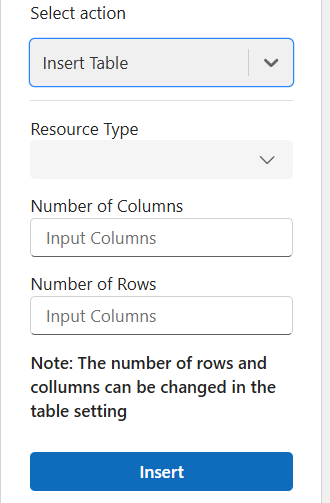
- Select the Action:
- In the "Select Action" dropdown, choose "Insert Table."
- Choose a Record Collection Variable:
- In the "Resource Type" field, select a Record Collection Variable Resource.
- Ensure that a resource is created before inserting the table.
- Only one collection variable is supported per table. Multiple collection variables are not currently supported.
- Define Table Structure:
- Set the resource type as a collection.
- Specify the number of columns and rows required.
- You can define or later modify the number of rows and columns using the built-in table editing tools (similar to Excel).
- Insert Fields and Manage Rows:
- Insert relevant fields into the table. You can insert multiple fields into the same cell.
- To create dynamic rows, set them as data rows by placing the cursor in any cell of the required row and click the Make Data Row option that appears under the Insert Table action.
- Sort Records :
- You can control the order of records displayed in the table.
- For example, to display orders in ascending order of amount, select the "Amount" field and set the order to Ascending.
- Apply Filters and Limits:
- Set filters to refine the records inserted into the table.
- Limit the number of records displayed.
- Define the order in which records appear.
Data rows repeat themselves for the selected collection. For example, the first row represents the first order item, the second row represents the second order item, and so on.
- While using the Insert Field action, the created Record Collection Variable is only available when you enter the Data row.
- Fields, conditions, and links can only be inserted within a designated Data Row
By following these steps, you can dynamically insert and manage tables in Salesforce based on record collections.
You can customize and format the table using standard Word formatting options, including font styles, alignment, borders, and shading.
Go to 1:29 to see the Insert Table action being used to create a sample receipt in Microsoft Word. Tables are useful for presenting hierarchical data, such as master-detail relationships, in a structured and organized manner.