CloudFiles Custom Permissions
CloudFiles offers granular permissions to manage access and functionality. Below is a list of these permissions:
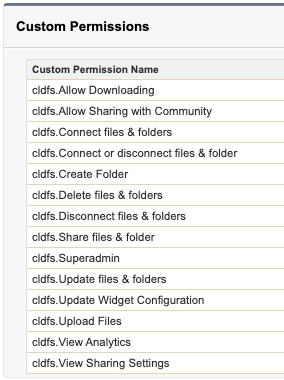
- Superadmin - Allows a user to manage everything with regard to CloudFiles Document Management.
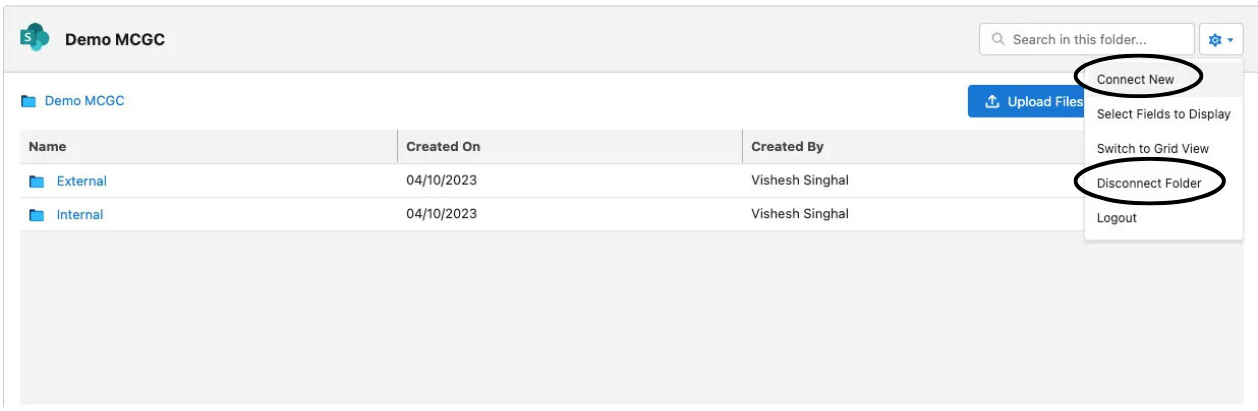
- Connect or disconnect files & folder - Allows a user to link/unlink a file or folder to a record in Salesforce
- Connect files & folder - Allows a user to only link a file or folder to a record in Salesforce
- Disconnect files & folder - Allows a user to only unlink a file or folder to a record in Salesforce

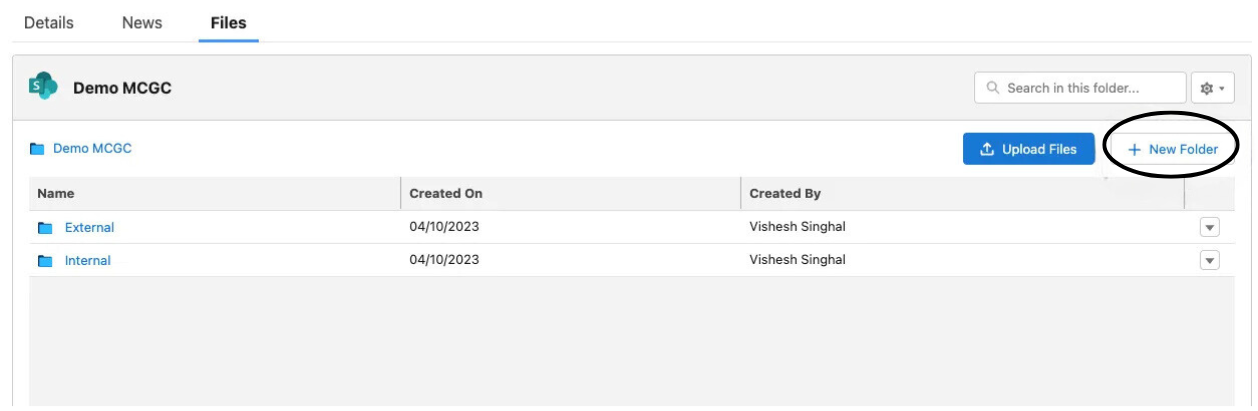
- Create Folder - Allows user to create sub folders inside a record's connected folders. In the UI, it controls the visibility of following action
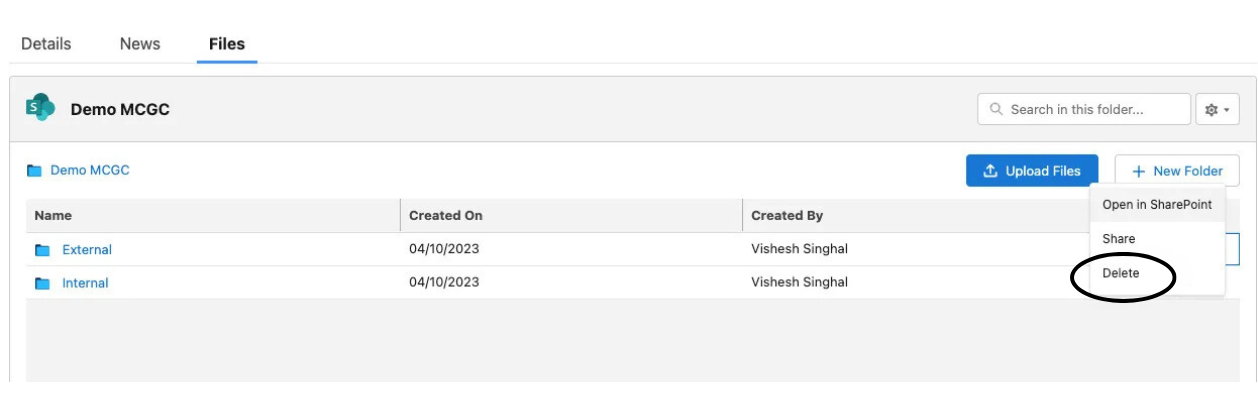
- Delete Files & Folders - Allows a user to delete a file or a folder from record page. This also deletes the files in the underlying external storage. In the UI, it controls the visibility of following actions
- Upload Files - Allows a user to upload files through the CloudFiles widget. In the UI, this permission controls the visibility of "Upload Files" button & "Drag and Drop" functionality
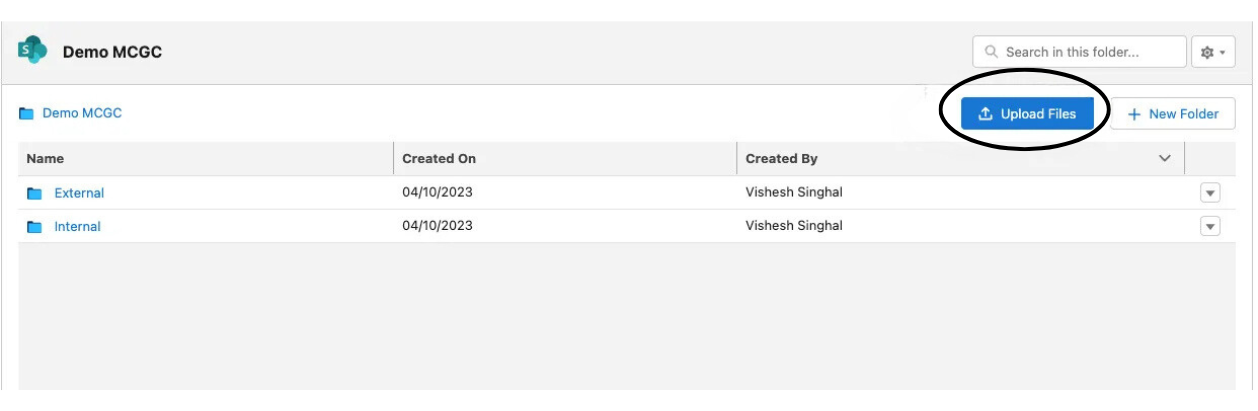
- Allow Download - This permissions allows a user to download files from CloudFiles widget or the file preview window.
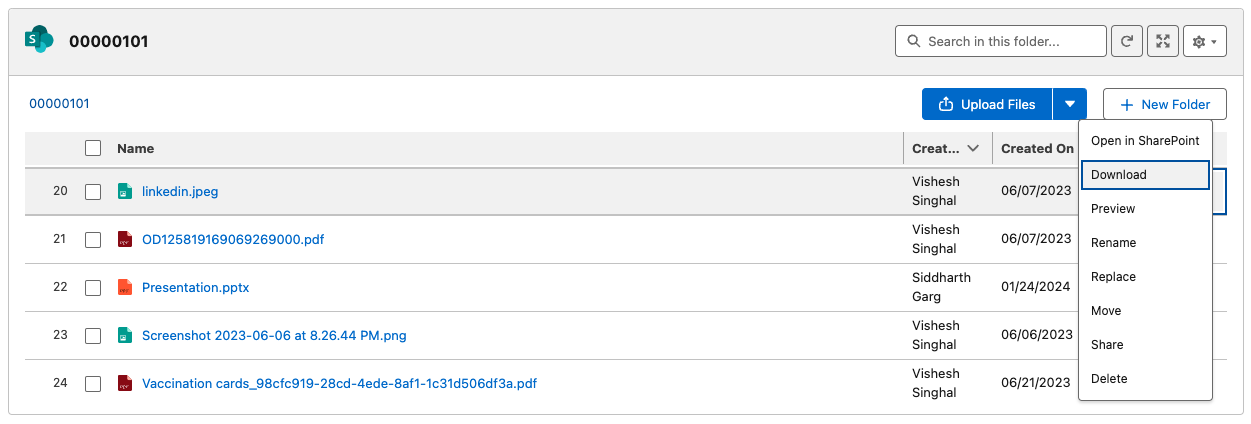
- Update Files & Folders - Allows a user to rename a file or folder or update any metadata properties or columns.
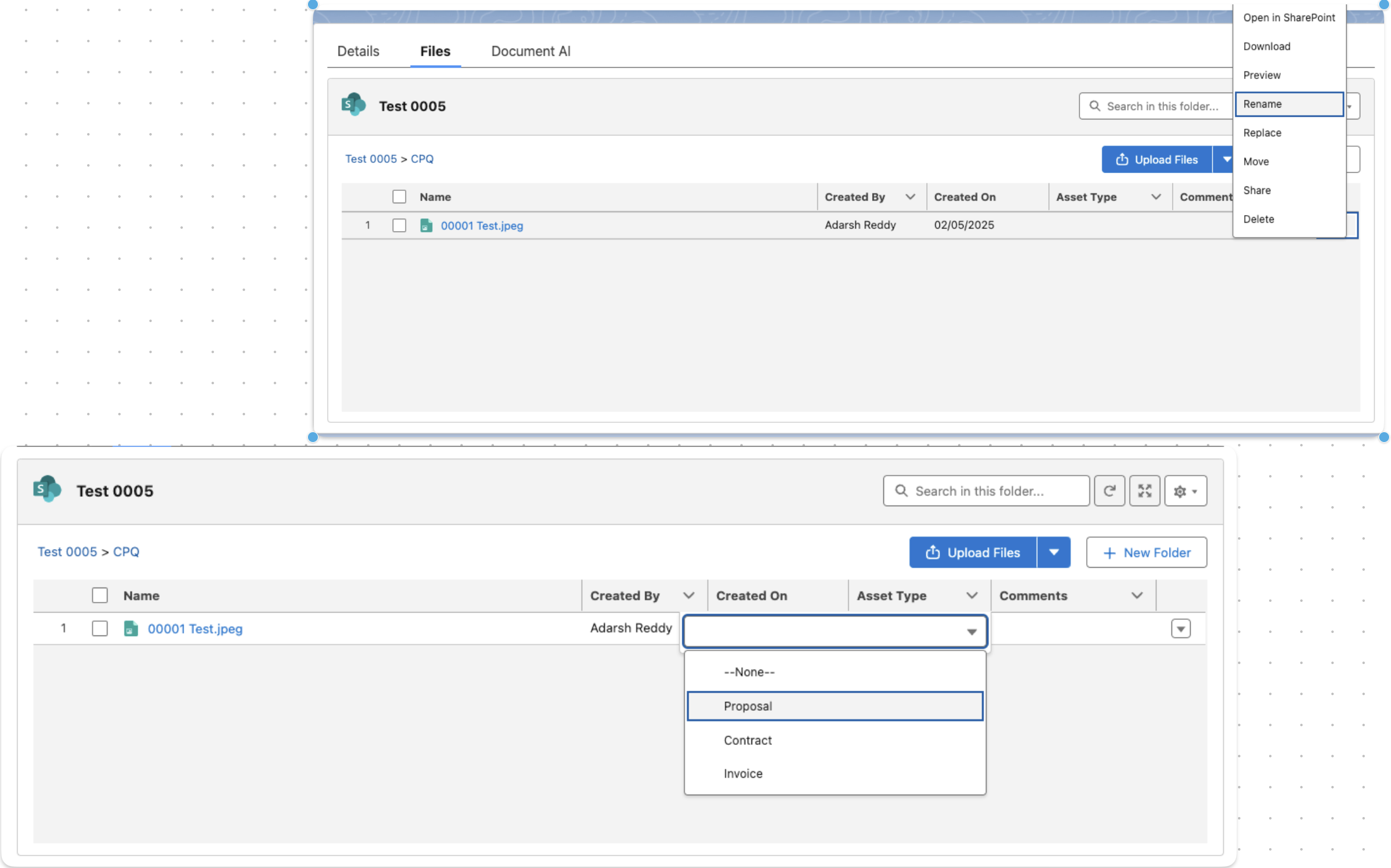
- Share Files & Folders - Allows a user to share files & folders externally, using a CloudFiles sharing link. For a file already shared, this permissions also controls the access for updating link settings
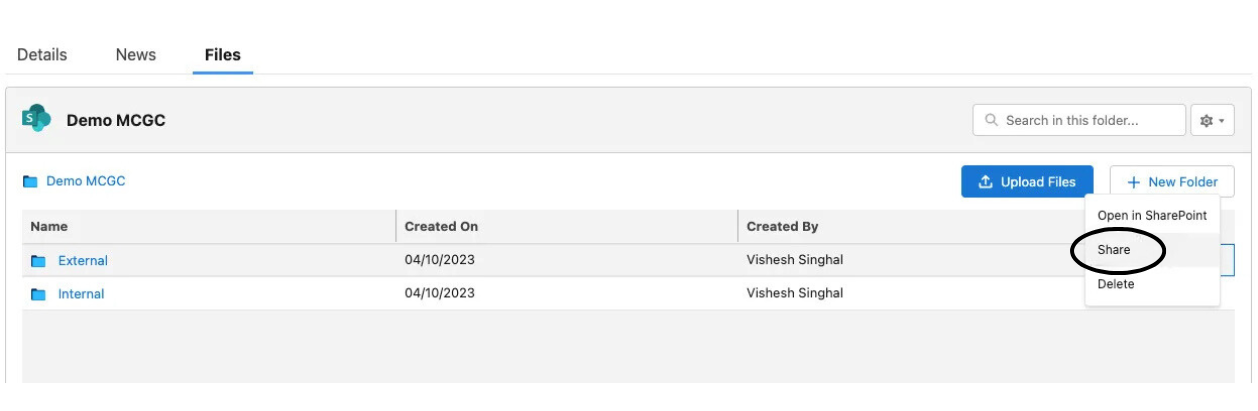
- Allow Sharing with Community - Allows an internal person to share a particular file/folder with community users or experience cloud users.
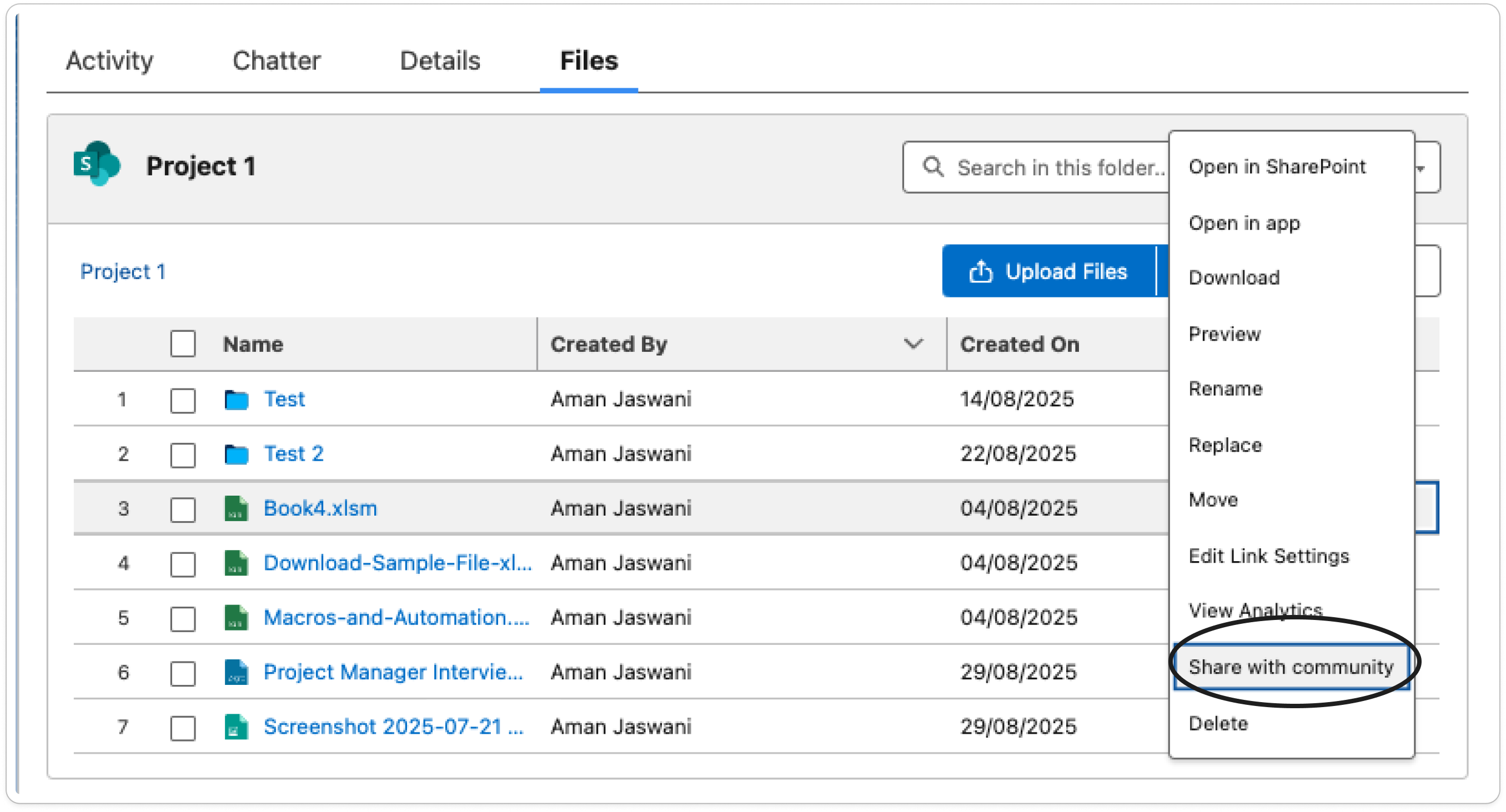
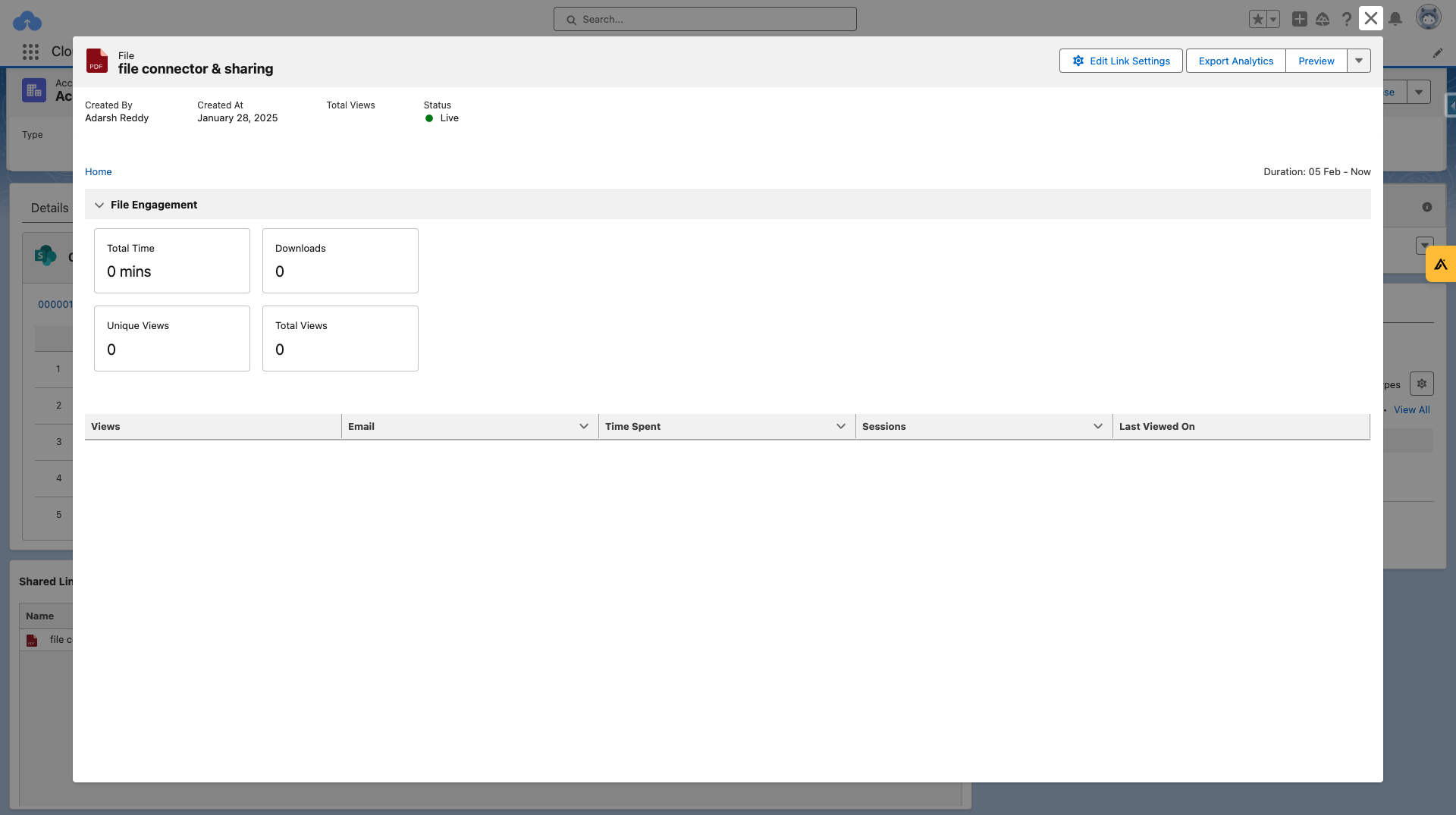
- View Analytics - If a file/folder is being shared externally using a CloudFiles link, this permission allows a user to view analytics like who is looking at the file/folder, how much time they're spending on it etc. from the "shared-links" widget.
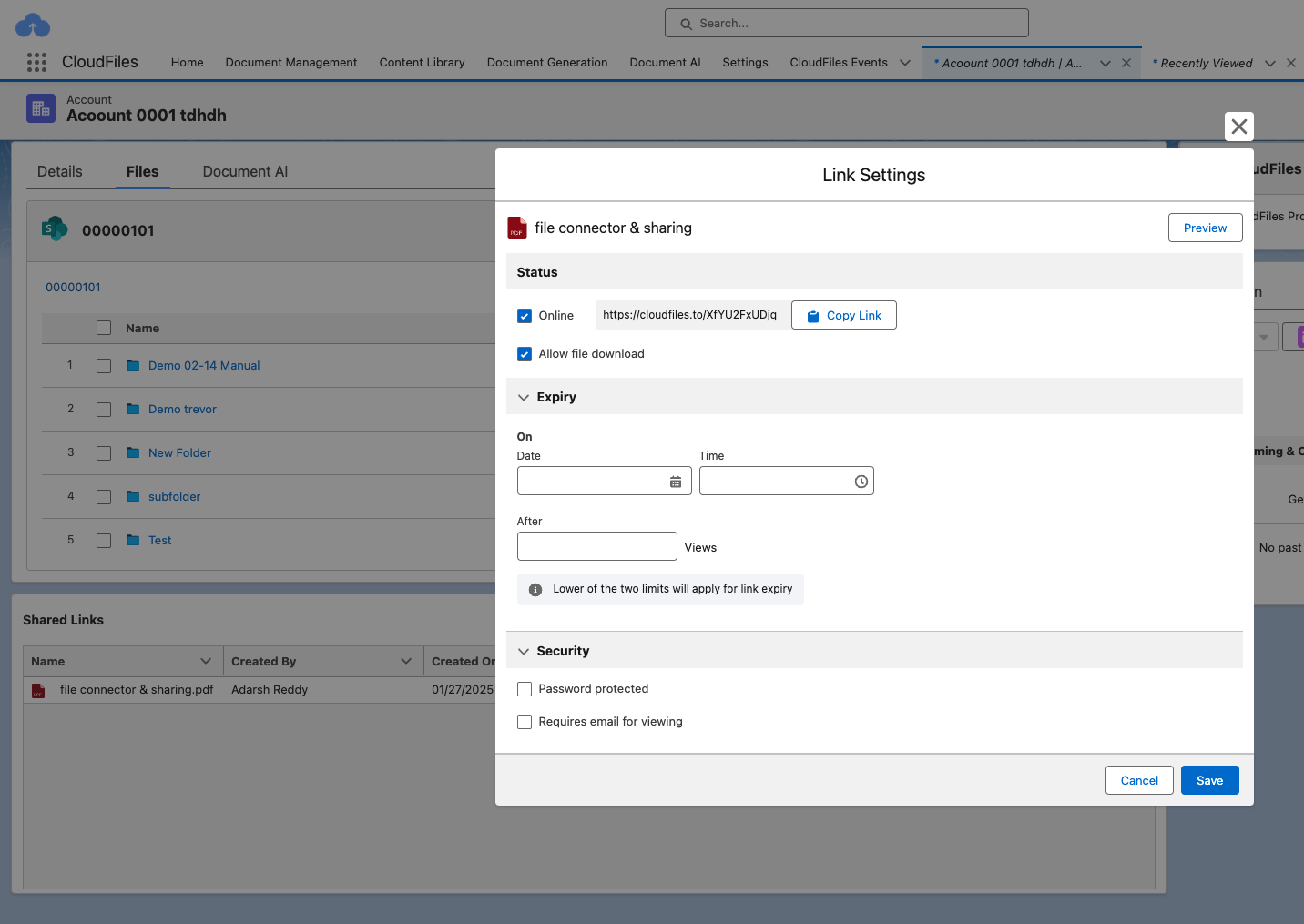
- View Sharing Settings - If a file/folder is being shared externally using a CloudFiles link, this permission allows a user to view the settings of the link, like who can access the link, if there is a password on the link etc.
Permission Sets
CloudFiles comes with few pre-packaged permission sets. You can always create a custom permission set using CloudFiles permissions described above.
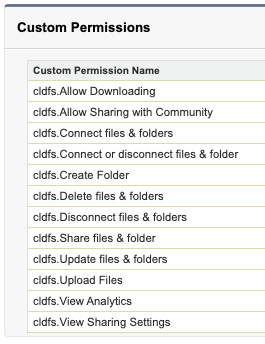
- CloudFiles Admin User - This permission set is suitable for admins who should have access to all CloudFiles functionality within Salesforce, including billing. It contains all the permissions listed the image below:
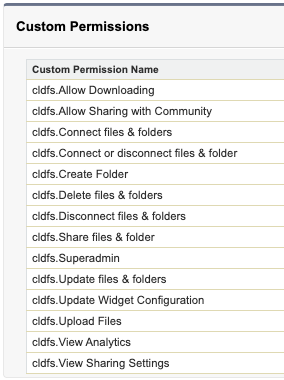
- CloudFiles Standard User - This permission set is suitable for all internal users (company employees) who should have access to all CloudFiles functionality except admin level features. It contains all the permissions listed the image below:
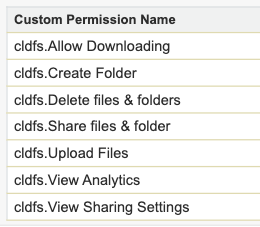
- CloudFiles External User - This permission set is suitable for experience cloud users(community users). It contains all the permissions listed the image below:
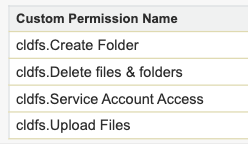
- CloudFiles Field Service User - This permission set is suitable for field service users . It contains all the permissions listed the image below:
Permission Set Assignment
To reduce the setup time, CloudFiles automatically assigns following permission sets on installation -
- CloudFiles Admin User - This is assigned to all users with "System Administrator" profile
- CloudFiles Standard User - This is assigned to all internal users except administrator
You can manage these assignments according to your needs.
When new users are added to your Salesforce org, they would need to be assigned CloudFiles permissions manually. You can also setup a flow to automatically do it when users are added. Please feel free to reach out to us for any help regarding this.
To manually assign permission sets, please follow the steps below
- Go to Setup > Permission Sets.
- Select appropriately among the available default package permission sets or custom permission sets.
- Click on Manage Assignments. Then Click Add Assignment. Choose the users you want to add the selected permission set for.
- Follow the prompts to finish the assignment process.