Introduction
In this test drive, you will explore how CloudFiles Document Management & Sharing, integrated with Salesforce Flows, can seamlessly copy files stored in external storage (e.g., SharePoint, Google Drive, OneDrive) back into Salesforce as native Salesforce Files.
This setup enables:
- Uploading files into a connected external storage folder directly from Salesforce records.
- Copying selected files back into Salesforce as Content Documents.
- Automatically attaching these files to the originating Salesforce record.
All of this is powered by CloudFiles Document Management and Salesforce Flows. The test drive takes under a minute to complete.
Instructions
The test drive runs in a Salesforce org that already has CloudFiles installed, so there is nothing to set up before you start.
To test out this feature, follow the simple instructions below:
- Navigate to the 'Opportunities' tab and create a new Opportunity. This action will automatically create a corresponding SharePoint folder, which can be viewed in the 'Files' tab.
- Click the "Upload Files" button or drag and drop files into the folder to begin uploading.
- In the 'Upload Files' pop-up window, select a value for the "Document Type" column for each file being uploaded, then click "Next." Notice that the "Next" button will not activate until a column value is selected for each file.
- Once the files are uploaded, click "Done."
- The Files are directly uploaded into SharePoint and can be viewed in the widget.
- To copy these files back into Salesforce, select the files from the widget and, from the list view actions, click Copy into Salesforce.
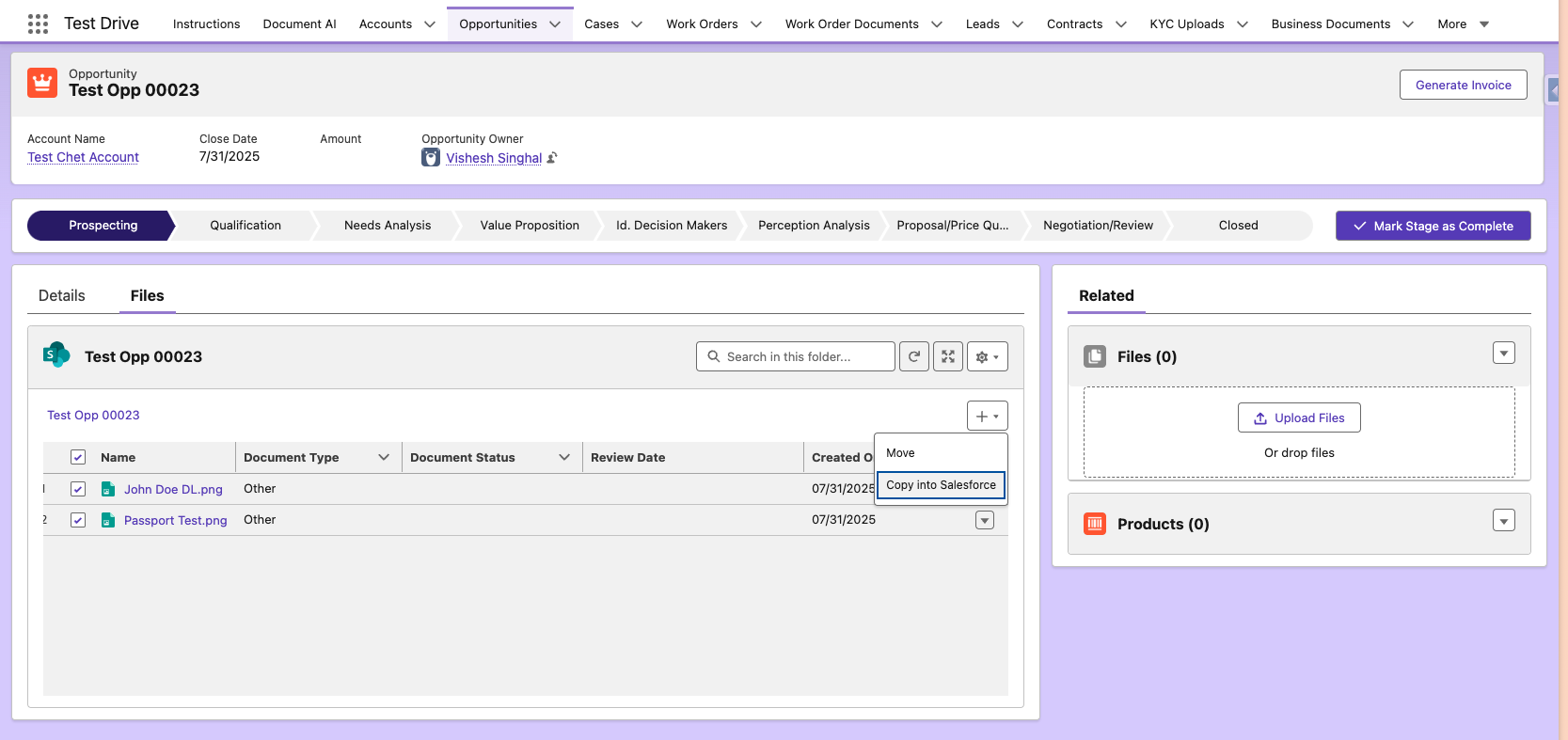
- Wait a few seconds for the automation to complete. Refresh the page.
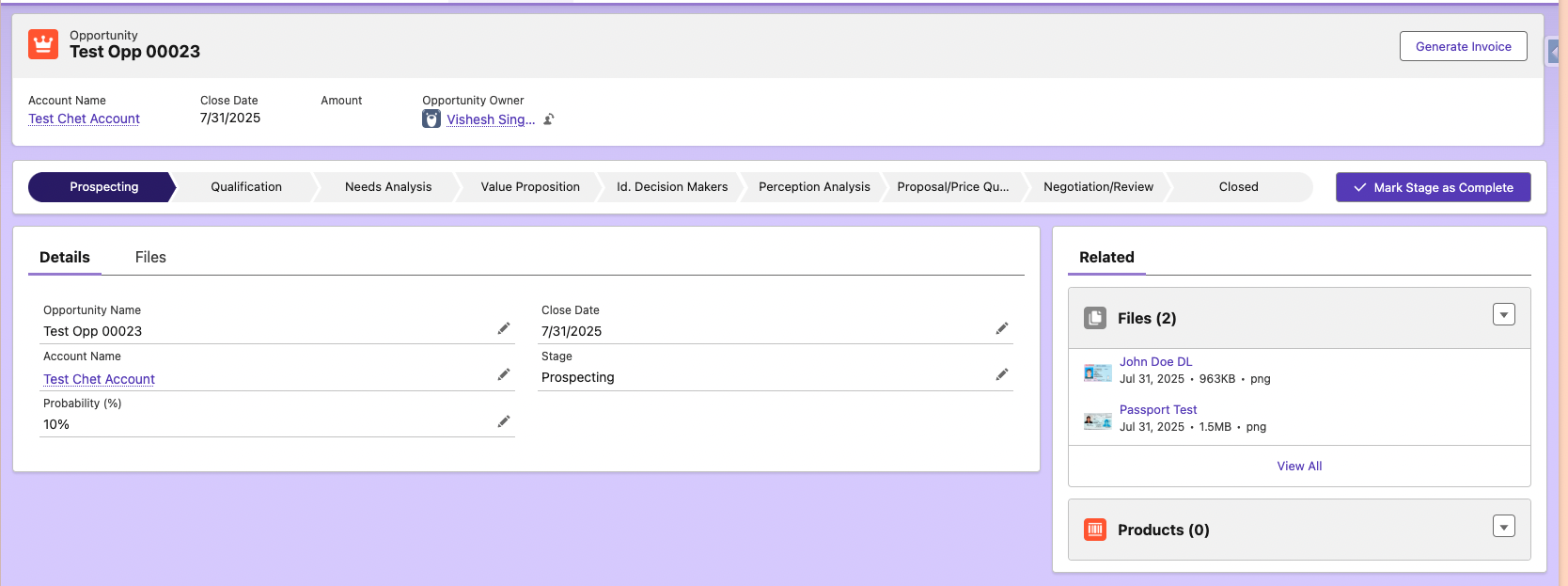
- You will now find the external files created as Salesforce Files and attached to the record’s Files related list.
Implementation
This solution uses Salesforce Flows that invoke CloudFiles Flow Actions.
CloudFiles Document Management handles:
- Passing the selected files’ Resource IDs to the flow.
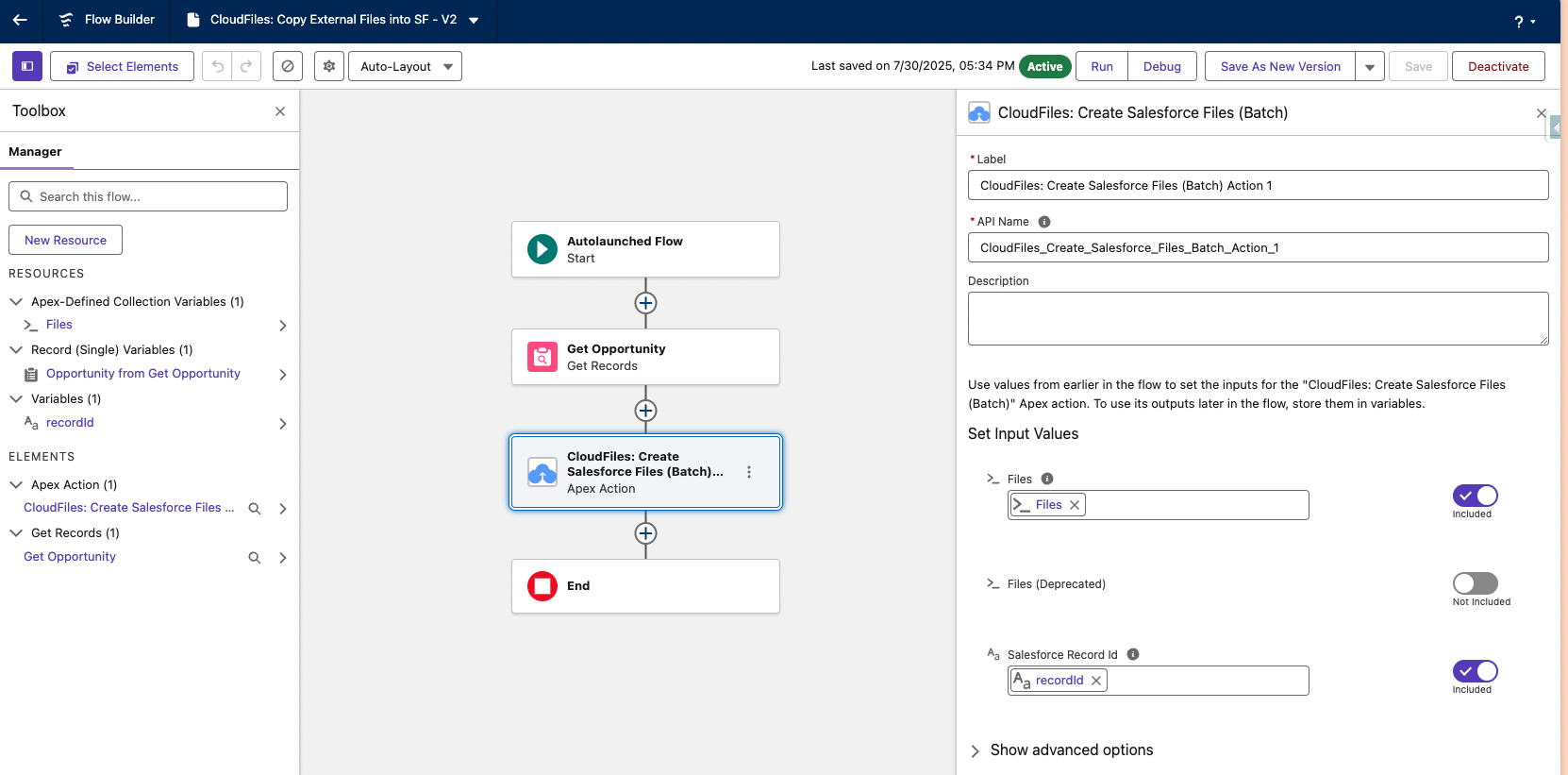
- The flow then executes the Create Salesforce Files (Batch) action, which creates Salesforce Files from external storage files.
- Once the Content Versions are created, a Content Version Created Batch event shall be published, from event details, Content Document Links are created to attach the files to the record.
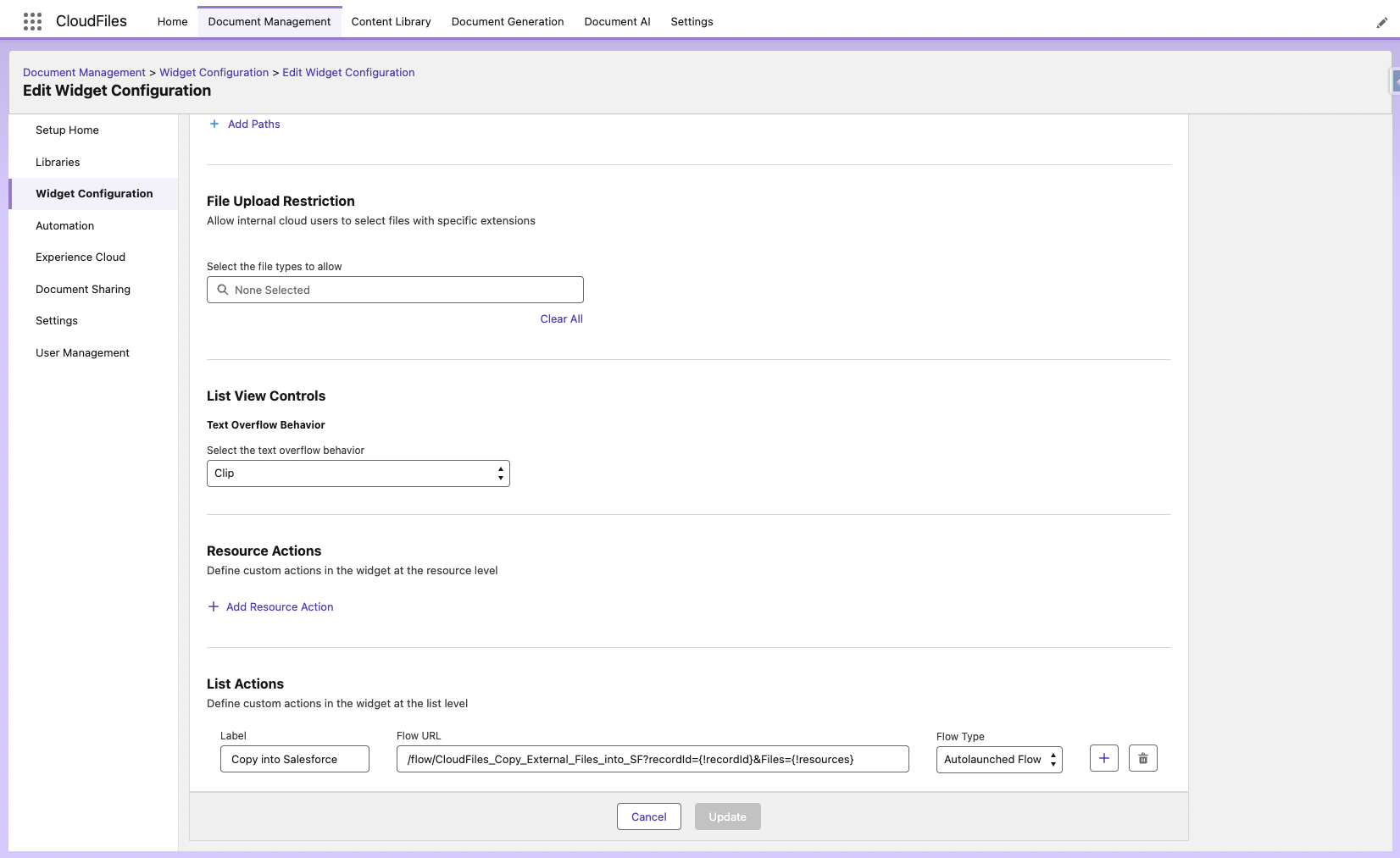
Additionally, this setup leverages the ability to add custom buttons to the file dropdown or list view in the CloudFiles component. These buttons can be configured to launch either screen flows or auto-launched flows, providing seamless integration and user-triggered automation directly from the file interface.
Beyond This Test Drive
The Create Salesforce Files (Batch) action is not just about the ability — it unlocks powerful scenarios where external storage files need to interact seamlessly with Salesforce-native processes and users. Here are a few key use cases where this capability shines:
Enable Access for Salesforce-Only Users
Copy selected external storage files into Salesforce so they can be shared with users who don’t have access to CloudFiles or the external storage system.
Example: A sales rep without SharePoint access can still view proposal files once they are copied into Salesforce Files.
Compatibility with Third-Party Integrations
Some Salesforce integrations only work with Salesforce Files (Content Documents). Copying ensures compatibility with these apps and workflows.
Example: An e-signature tool that only accepts Salesforce Files can work seamlessly after external contracts are copied in.
Cross-Storage File Migration
Use Salesforce as a bridge to move files from one external storage to another.
Example: Copy a contract from SharePoint into Salesforce Files, then sync it to AWS S3 as part of an archival process.
Leverage Native Email & File Features
Bring external files into Salesforce to use them with native Salesforce features like sending files as email attachments.
Example: A proposal stored in OneDrive can be copied in and directly emailed from Salesforce with a single click.
Approval Processes with Files
Files copied into Salesforce can participate in native approval workflows, allowing document-driven processes to run smoothly.
Example: A contract uploaded to Google Drive is copied into Salesforce and routed through a multi-step approval process.
In essence, this feature extends CloudFiles’ Document Management by ensuring external content can fully participate in Salesforce’s ecosystem — from approvals, sharing, and emailing, to third-party integrations and cross-platform file workflows.