The CloudFiles Events track actions related to files, folders, and datarooms, providing details on when and how they are accessed, shared, or attached.
- File-viewed Event logs when a shared file is opened. It records the number of views, the percentage of content read, the total time spent, and the number of downloads. It also captures the date of access and link details, including the name and URL.
- File Received tracks when a file is uploaded to a dataroom. It includes the file name, the associated file request block, and the date it was received.
- Resource Attached records when a file, folder, or dataroom is linked to a record. It captures the resource name, type, and the date it was attached.
- Link Created logs when a shareable link is generated for a file, folder, or dataroom. It includes the link name, type, and creation date.
These events help monitor file interactions, maintain accurate records, and track how shared content is accessed and managed.
1. File-viewed Event
About
The File-viewed event records details when someone opens and interacts with a shared file. It tracks how much of the file was read, how many times it was viewed, the total time spent, the number of downloads, the access date, and the link used to view the file. This helps in understanding file usage and user engagement.
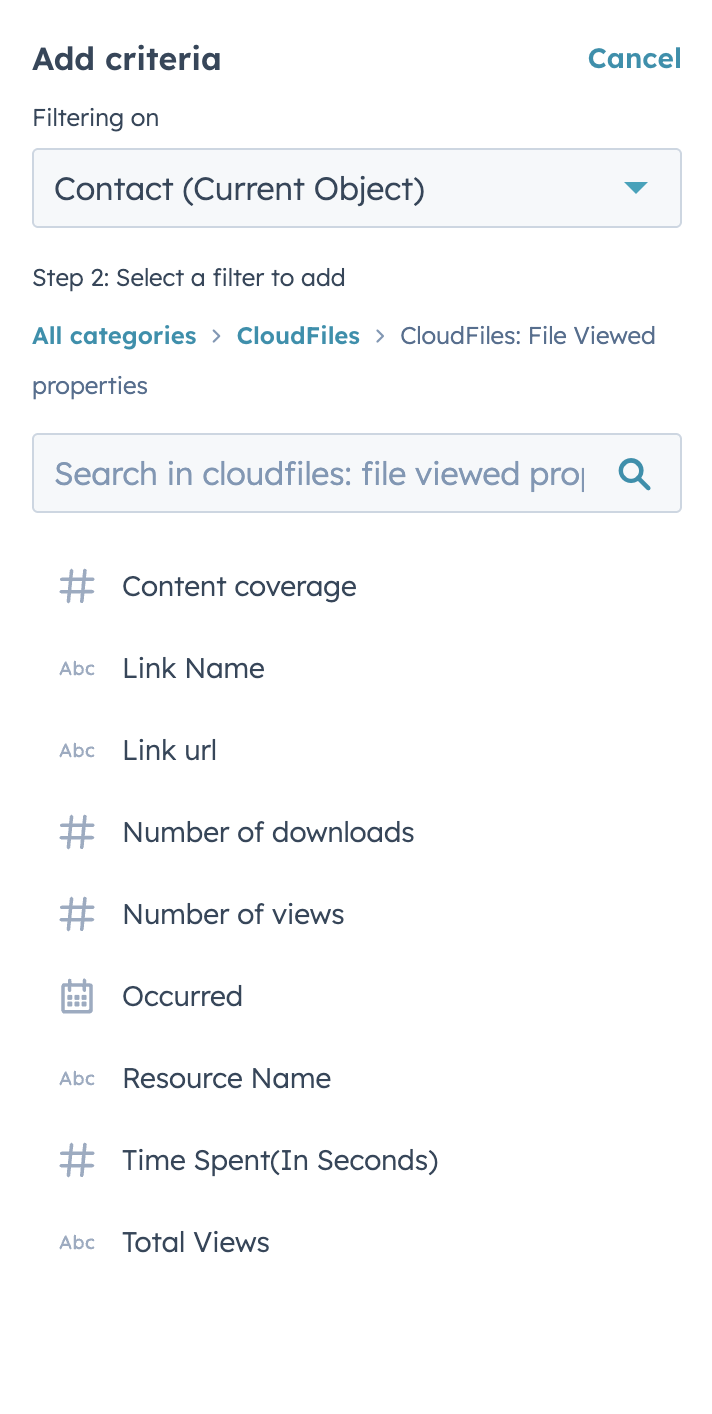
Properties
i) Content Coverage
This shows the percentage of the file that was read. For example, if a file has 10 pages and only 1 page is read, the value is 10%. If the user scrolls to the last page without reading, it still shows 100%.
ii) Link Name
This is the name of the shared link. In HubSpot, the link name usually matches the name of the associated HubSpot record. In the CloudFiles web app, users can name the link however they like.
iii) Link URL
This is the web address of the shared file. The URL differs between HubSpot and the CloudFiles web app, even if the file is the same.
iv) Number of Downloads
This shows how many times the file was downloaded. For example, if a whitepaper is downloaded more than five times by one contact, a workflow can assign a lead nurturing task to the marketing team.
v) Number of Views
This is the total number of times the file was accessed. If a case study is viewed multiple times by a contact, a workflow can enroll them in a relevant campaign.
vi) Occurred
This is the date when the file was viewed. For example, scheduling follow-ups based on this date allows actions like sending a thank-you email a day after a demo video is watched.
vii) Resource Name
This is the name or title of the file that was accessed. A workflow can notify the product team when a specific file like "Beta_Features_Guide" is viewed, so they can prepare for feedback.
viii) Time Spent (in seconds)
This shows how long the file was viewed, measured in seconds. If a prospect spends over 300 seconds on a pricing document, they can be moved to a priority lead list.
ix) Total Views
This is the total number of times the file has been accessed across all sessions. The number can vary between the same file shared via different links in HubSpot and the CloudFiles web app, since the links are different.
2. File Received
About
The File Received event is recorded when someone uploads a file to a dataroom. It captures the file name, the request block it was submitted to, and the date it was received. This helps in tracking document submissions.
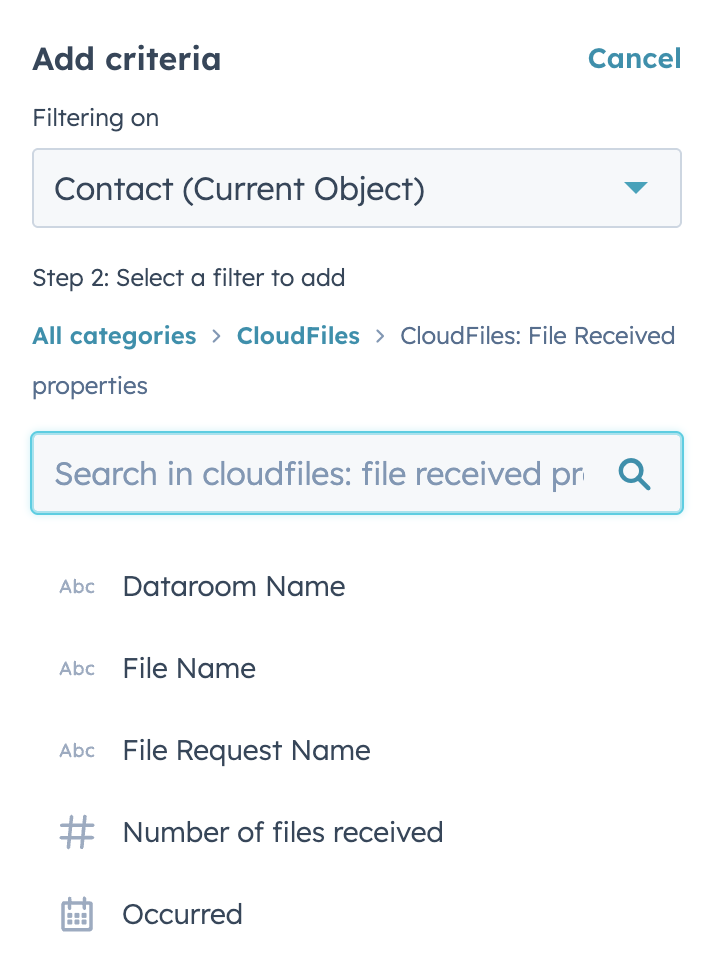
Properties
i) Dataroom Name
This is the name of the dataroom where the file was uploaded. Workflows can use this to notify teams, such as alerting the compliance team when documents are added to a specific dataroom.
ii) File Name
This is the name of the uploaded file. It can be used in workflows or communications to refer to the received document.
iii) File Request Name
This is the name of the request block where the file was submitted. It can be used in HubSpot workflows to filter or trigger actions based on the request source.
iv) Occurred
This is the date the file was received in the dataroom. It can trigger actions or notifications in HubSpot workflows when a file is received.
3. Resource Attached
About
The Resource Attached event is recorded when a file, folder, or dataroom is attached to a HubSpot record. This helps in keeping a record of shared resources.
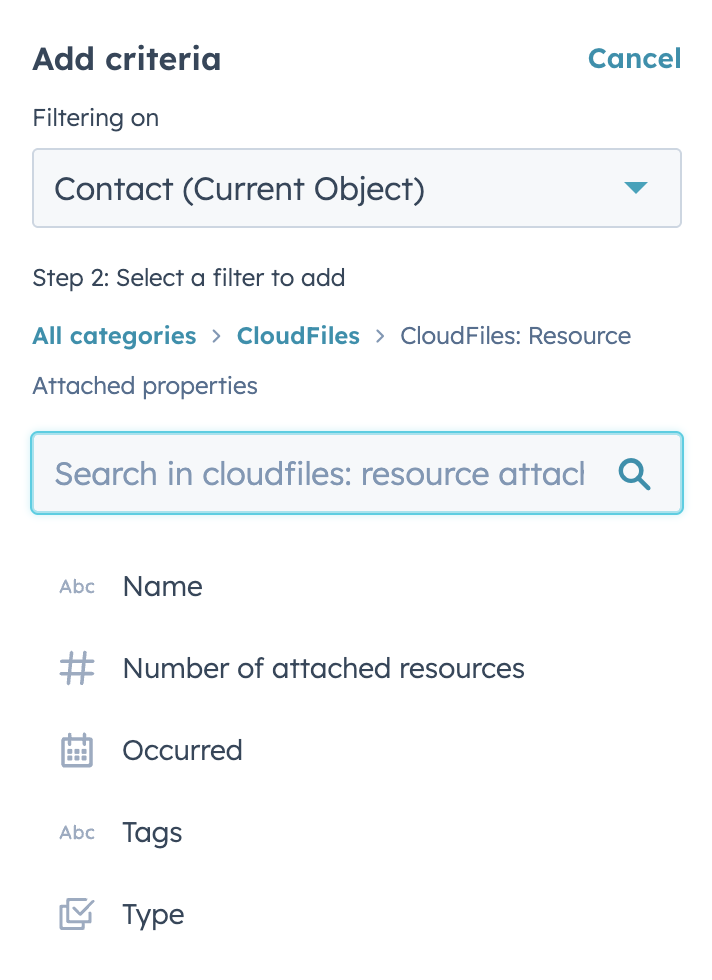
Properties
i) Name
This is the name of the file, folder, or dataroom that was attached. For example, if a file named "Contract_Template" is attached to a deal, a workflow can notify the legal team.
ii) Occurred
This is the date when the resource was attached. This can be used to schedule follow-ups, such as setting a review meeting a week after a proposal is attached.
iii) Tags
This property is not currently used in workflows.
iv) Type
This shows whether the attached resource is a file, folder, or dataroom. Different workflows can be triggered based on the type—for example, prompting the team to review content when a folder is attached or reviewing content when a file is added.
4. Link Created
About
The Link Created event captures when a shareable link is generated for a file, folder, or dataroom. It includes the link name, type, and the date it was created.
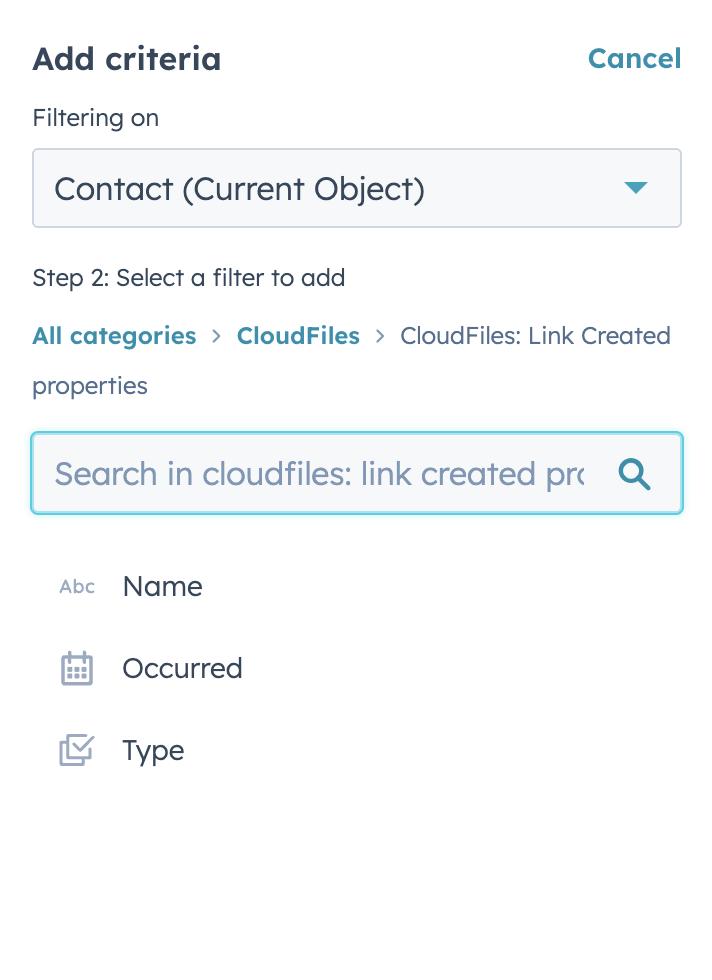
Properties
i) Name
This is the name of the link created for the file, folder, or dataroom. For example, if a link named "Product_Brochure_Q1" is created, a workflow can trigger a follow-up task for the sales team.
ii) Occurred
This is the date when the link was created. For instance, if the file is viewed on a certain date, you can schedule a follow-up email for the next day.
iii) Type
This shows whether the link was created for a file, folder, or dataroom. For example, when a dataroom is created, a task can be assigned to a project manager to review its contents.
Thus, this event helps track the creation of shareable links, ensuring transparency and better control over shared content.